Watch It Again, Harder: The British Shows That Punish You For Only Watching Once
There's a particular kind of smugness that settles over you when you're rewatching a brilliant British drama and you catch something — a throwaway line in episode two that turns out to be the entire emotional engine of the finale. You sit there, possibly alone, possibly in your pants, pointing at the television like a detective who's just cracked the case. "I knew it," you whisper to no one.
This is what the very best British TV was built for. Not comfort. Not nostalgia. Revelation.
Because while plenty of shows reward a second viewing with warm familiarity, there's a specific breed of British telly that practically demands you flip the screen back on — not because you missed it, but because you couldn't possibly have caught everything the first time. These are the shows that were quietly laughing at your single-watch confidence all along.
The Office: The Sitcom That Becomes a Tragedy on Repeat
Everyone remembers The Office as the show that made cringe comedy an art form. Ricky Gervais and Stephen Merchant's mockumentary masterpiece was funny, yes — painfully, brilliantly funny. But watch it again and something shifts.
David Brent stops being a buffoon and becomes something far more uncomfortable: a man desperately performing for a camera crew because he genuinely believes it's his only shot at being loved. The jokes are still there, but the sadness underneath them is no longer subtext — it's the whole text. Tim's lingering glances at Dawn go from sweet to heartbreaking when you know how long he's going to wait. Gareth's rigid rule-following starts to look less like pomposity and more like the coping mechanism of someone who needs structure because chaos terrifies him.
The Office on rewatch isn't a sitcom. It's a character study wearing a sitcom's clothes, and it's one of the most quietly devastating things British television has ever produced.
Peaky Blinders: The Symbolism You Absolutely Missed
The first time you watch Peaky Blinders, you're watching it for the coats. And the haircuts. And Cillian Murphy looking like he was carved from Birmingham limestone by an angry god. Fair enough — it's a visually extraordinary show.
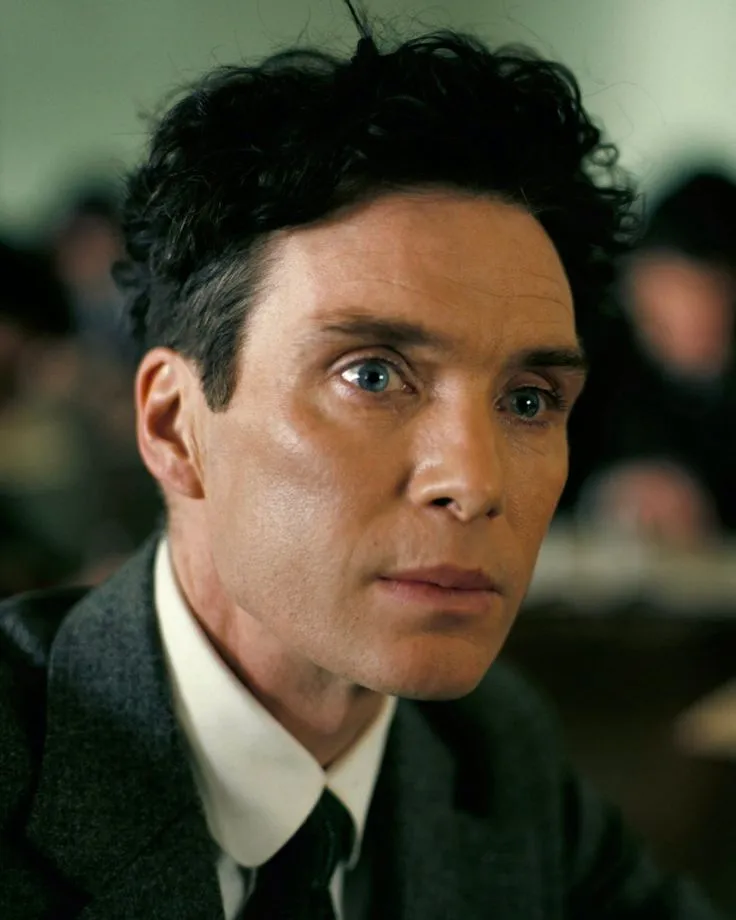 Photo: Cillian Murphy, via i.pinimg.com
But rewatch it and the layers start peeling back in ways that are almost architectural. The recurring motifs — fire, horses, the colour red, the Romani superstitions that Tommy publicly dismisses but privately cannot escape — aren't decoration. They're a structural language. Tommy's shellshock isn't just backstory; it's a lens through which every single decision he makes becomes legible in a completely new way.
Creator Steven Knight has talked openly about the show being written with a mythological framework in mind, and on a second viewing you start to see exactly what he meant. Characters who seemed peripheral in series one turn out to be load-bearing walls. Dialogue that felt like tough-guy posturing reveals itself as foreshadowing so precise it's almost cruel.
The show was always smarter than its reputation as a gangster drama suggested. The rewatch just proves it.
Fleabag: The Fourth Wall Had a Fifth Wall All Along
Phoebe Waller-Bridge's Fleabag is one of those rare cultural moments where the rewatch doesn't just reward you — it fundamentally changes what you think you watched. The direct-to-camera addresses that made the first series feel so bracingly intimate take on an entirely different quality once you understand the emotional architecture of the second.
 Photo: Phoebe Waller-Bridge, via celebmafia.com
That relationship with the Priest. The moment he sees her breaking the fourth wall. The gut-punch of what it means for someone to notice the defence mechanism you've been using to survive. Watch it again knowing what you know and those early asides — breezy, witty, apparently throwaway — become something closer to distress signals.
Waller-Bridge built a show that functions as entertainment on the first pass and as grief on the second. That's not an accident. That's craft operating at a level that most television doesn't even attempt.
Utopia: The Show That Knew Too Much
For those lucky enough to have caught Dennis Kelly's Channel 4 conspiracy thriller before it was quietly buried and then awkwardly remade by Amazon, the rewatch experience is almost surreal. A story about a shadowy organisation pursuing a graphic novel that predicts global catastrophes — including, in its second series, a pandemic response — hits rather differently now than it did in 2013.
But beyond the eerie prescience, Utopia rewards rewatching because its plotting is so dense and its character motivations so carefully constructed that you genuinely cannot catch everything in one go. The show was written to be experienced like a piece of music — individual notes that only make full sense once you've heard the whole composition.
It's also, on a second viewing, significantly more frightening. Which is quite an achievement for a show you originally thought you understood.
Why We Rewatch Differently Now
Streaming has changed the rewatch in ways that are worth acknowledging. Binge culture means we often consume shows too quickly the first time — racing through episodes at a pace that prioritises plot over texture. The rewatch, then, has become a corrective. A chance to actually watch rather than simply process.
But the best British TV has always been built with this in mind. The writers' rooms that produced these shows weren't just telling stories — they were constructing puzzles, planting flags, trusting audiences to come back and find them.
That trust is, in itself, something worth celebrating. In an era when broadcasters are increasingly terrified of losing viewers' attention, there's something quietly radical about making television that reveals its full self only to those patient enough to return.
So yes — watch it again. Watch it harder. The screen has been waiting for you to flip it back on.
And this time, pay attention.