Sofa, So Good? How Britain Quietly Stopped Watching Telly the Same Way
There was a time — not that long ago, really — when the television schedule was basically a second religion in British households. You ate your tea at the right time, you planted yourself on the sofa, and you watched what the telly told you to watch. ITV said 9pm, you said yes. BBC One said Saturday night, you cleared your plans. The remote was law. The EPG was gospel.
That world? Gone. Completely, irreversibly, gloriously gone.
Streaming hasn't just handed us more content to consume — it's fundamentally dismantled the architecture of how the UK sits down to be entertained. And the data backs this up in ways that are both fascinating and, if you're feeling nostalgic, ever so slightly heartbreaking.
The Numbers Don't Lie (And Neither Does Your Netflix History)
Cast your mind back five years. The average Brit was still tethered — at least partially — to the traditional broadcast schedule. Catch-up services like BBC iPlayer and ITV Hub existed, sure, but they were largely used for, well, catching up. Streaming was growing, but it hadn't yet eaten the living room whole.
Fast forward to now, and the picture is dramatically different. Recent Ofcom data suggests that streaming platforms now account for over a third of all video viewing time in the UK, with younger audiences — those 16 to 34-year-olds that advertisers absolutely obsess over — barely engaging with live television at all outside of major events. Netflix, Disney+, Amazon Prime Video, and the increasingly formidable Apple TV+ have collectively become the default mode of entertainment for millions of households.
More tellingly, it's not just what we're watching that's changed. It's how.
The Dual-Screen Generation Has Taken Over the Sofa
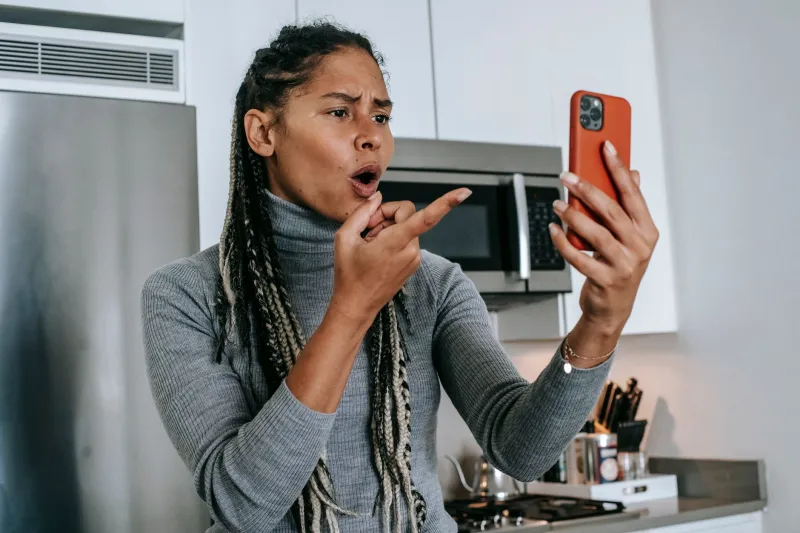
Here's a scene that will feel painfully familiar: someone in your household is watching a show on the telly, phone in hand, simultaneously scrolling TikTok, texting a mate, and half-reading a Reddit thread about the very episode currently playing. That's not distraction — that's the new normal.
Dual-screening, the practice of using a second device while watching television, has become the dominant viewing behaviour across the UK. Research from Thinkbox found that the majority of TV viewers regularly use another screen while watching. And streaming has only accelerated this. When you're not beholden to a schedule, when there's no urgency to pay attention right now, the phone becomes an extension of the viewing experience rather than a threat to it.
Is this a bad thing? Genuinely hard to say. On one hand, it fragments attention in ways that broadcasters find alarming. On the other, it's created entirely new forms of communal engagement — live-tweeting, fan forums, group chats blowing up mid-episode. The conversation around TV has arguably never been louder. It's just moved somewhere else.
Appointment Television: A Fond, Slightly Sad Farewell
Remember when EastEnders had the power to clear a pub? When the nation collectively held its breath for a Who Shot Phil Mitchell? reveal? That era of appointment television — the idea that you had to watch something at a specific time or risk being left behind — has been almost entirely eroded by the streaming model.
And look, there are obvious upsides. No more rushing home. No more VHS timer recordings that somehow always cut off the last three minutes. No more being spoiled by a colleague who watched it early. Convenience has won, and it's won decisively.
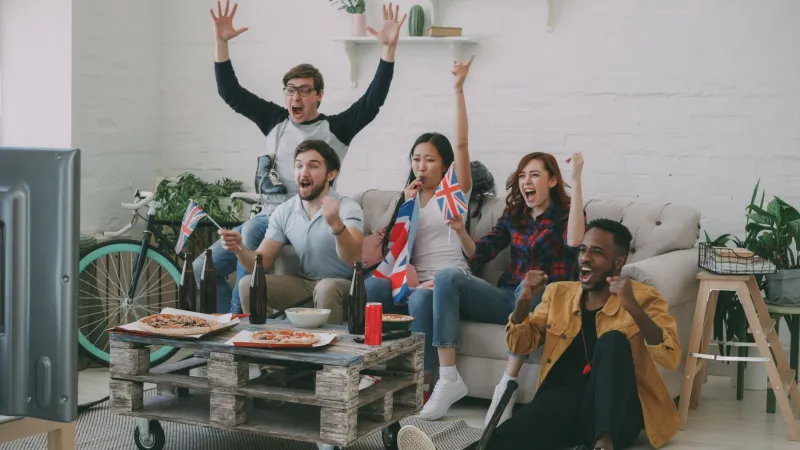
But something has been lost in the transaction. The shared cultural moment — that electric feeling of an entire country experiencing something simultaneously — is increasingly rare. When was the last time you felt the genuine, nationwide weight of everyone watching the same thing at the same time?
Can the 'Nation Watching Together' Moment Survive?
This is where it gets genuinely interesting — and a little complicated.
The Gavin and Stacey Christmas Special in 2019 pulled in over 17 million viewers on BBC One. Seventeen million. In an era of fragmented streaming and a billion content options, that number was staggering. It felt like proof that the communal telly moment wasn't dead — just resting.
But here's the thing: that special worked partly because it was a rare, finite event on a free-to-air channel at a culturally loaded time of year. Christmas Day, BBC One, beloved characters returning after a decade. It was engineered for appointment viewing in a way that almost nothing else is anymore.
Streaming platforms have tried — and occasionally succeeded — at recreating this. The finale of Squid Game season one generated enormous cultural conversation. So did The Last of Us, The Bear, and closer to home, Adolescence on Netflix, which had the UK absolutely gripped earlier this year. But there's a crucial difference: those moments tend to be staggered. Half the country watched Adolescence in week one. Others came to it weeks later. The water cooler conversation is real, but it's stretched across time rather than concentrated in a single evening.
Netflix's decision to occasionally release episodes weekly rather than all at once — as they've done with certain high-profile series — is a deliberate attempt to manufacture that appointment-TV tension. It's working, up to a point. But it's also a concession that the pure binge-drop model, for all its appeal, strips away the communal drama of waiting.
So What Does the British Telly Landscape Actually Look Like Now?
Honestly? It's a glorious, slightly chaotic mess — and we mean that affectionately.
Brits are watching more content than ever, across more platforms, on more devices, in more configurations. The 55-inch screen in the living room competes with the laptop in bed, the tablet in the kitchen, and the phone on the commute. The idea of a single, shared family viewing experience has fractured into dozens of individual micro-viewing sessions happening simultaneously under the same roof.
Broadcasters aren't standing still, either. The BBC's investment in iPlayer as a destination platform — not just a catch-up service — is significant. Channel 4's streaming pivot has been bold, if turbulent. And ITV's ITVX has quietly become a more serious proposition than its predecessor ever was.
The screen has been flipped, in every sense. The power has shifted from the broadcaster to the viewer, from the schedule to the algorithm, from the shared moment to the personal queue.
The Remote Isn't Required — But Do We Miss It?
Here's our hot take, offered with full awareness that it's a bit sentimental: yes, a little bit. Not the remote itself — good riddance to hunting down a AA battery at 10pm — but what it represented. The ritual. The shared anticipation. The fact that television, at its best, used to make Britain feel like it was in the same room.
Streaming has given us freedom, flexibility, and frankly an embarrassing amount of content. What it hasn't quite cracked is replicating that feeling of a nation leaning in together.
Maybe it doesn't need to. Maybe the new version of 'watching together' is your group chat losing its mind over a plot twist, one notification at a time.
Either way, the sofa remains. And honestly, that's enough.