The Tears Factory: How British Reality TV Became the World's Most Efficient Emotion-Mining Operation
The Anatomy of a Manufactured Moment
There's a moment that happens in every series of Strictly Come Dancing — usually around week six — when the cameras find a celebrity in the rehearsal room, sweating through their spray tan, and suddenly the music swells. Not the rehearsal music, mind you, but a carefully selected piece of emotional manipulation that the sound engineers have been saving for precisely this moment.
 Photo: Strictly Come Dancing, via i.pinimg.com
The celebrity will be struggling with a particularly challenging routine, their professional partner offering gentle encouragement while the cameras capture every bead of perspiration, every moment of self-doubt. Then comes the breakthrough — a successful lift, a perfectly timed spin, a smile of genuine accomplishment — and the nation collectively reaches for the tissues.
This isn't accident. This isn't serendipity. This is the result of a production process so refined, so psychologically sophisticated, that it could make Pavlov himself applaud. British reality television has become the world's most efficient emotion-mining operation, and we're all willing participants in the excavation.
The Backstory Drip-Feed
The foundation of any effective emotional ambush lies in what producers call 'contestant journey mapping' — though they might as well call it 'how to make viewers care about complete strangers in under six weeks'. The process begins long before the cameras roll, with casting directors specifically seeking participants whose life stories contain what they euphemistically term 'relatable challenges'.
These aren't necessarily tragic stories — though tragedy certainly helps — but rather experiences that tap into universal anxieties. The single parent juggling career and family. The person who's spent years doubting their own abilities. The individual carrying the weight of others' expectations. The key is finding stories that allow viewers to project their own struggles onto the screen.
Once these narratives are identified, they're parcelled out across the series like a controlled substance. Too much backstory too early, and viewers become overwhelmed or cynical. Too little, and they remain emotionally detached. The sweet spot lies in the gradual revelation, each episode adding another layer to the participant's story until viewers feel they genuinely know and care about these people.
The X Factor perfected this technique to an almost scientific degree. Audition packages would hint at struggle, live shows would reveal additional details, and the judges' houses segment would provide the emotional climax that transformed contestants from hopefuls into 'journeys' that viewers could invest in.
 Photo: The X Factor, via www.dtechtag.in
The Musical Manipulation
If backstory is the foundation, then music is the architecture of emotional manipulation. British reality shows employ teams of music supervisors whose job is essentially to be emotional puppet masters, using sound to guide viewers through predetermined emotional states.
The process is remarkably sophisticated. Different musical keys trigger different psychological responses — minor keys for melancholy, major keys for triumph, certain chord progressions for nostalgia. Tempo changes signal emotional shifts, while instrumental choices add layers of meaning. Strings for heartbreak, piano for contemplation, brass for victory.
I'm A Celebrity... Get Me Out Of Here! has turned this into high art. The show's composers create what they call 'emotional templates' — musical frameworks that can be applied to any situation to generate the desired response. A contestant facing their fears gets the 'personal growth' template, complete with tentative opening notes that build to triumphant resolution. A tearful phone call home triggers the 'connection' template, all warm harmonies and gentle crescendos.
The genius lies in the subtlety. Viewers rarely notice the music consciously, but their emotional responses are being guided as surely as if they were watching a feature film. The difference is that this manipulation feels spontaneous, authentic, real.
The Edit Suite Alchemy
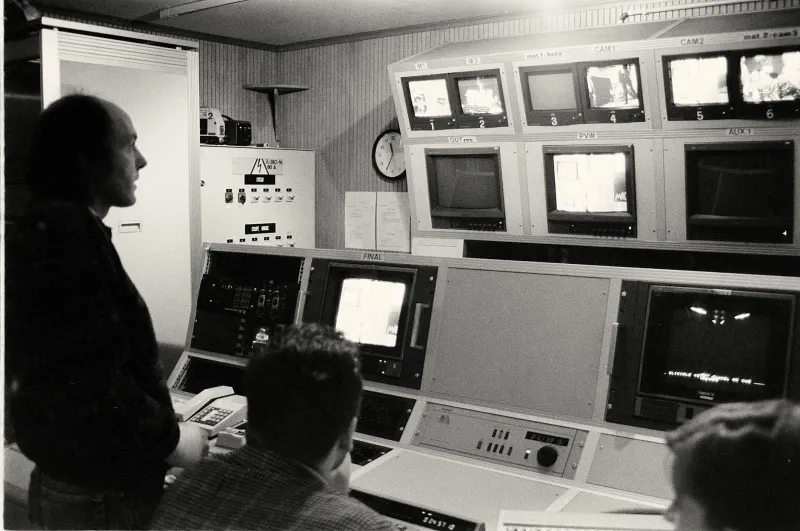
But the real magic happens in post-production, where editors with psychology degrees (and we're only half-joking about that) transform hours of mundane footage into concentrated emotional experiences. This is where the slow-motion close-ups are born, where tears are stretched into eternity, where every meaningful glance is preserved and amplified.
The technique is called 'emotional pacing', and it's as much about what's left out as what's included. Boring conversations are excised, unflattering moments disappear, and anything that might puncture the carefully constructed emotional bubble is ruthlessly eliminated. What remains is a heightened version of reality where every moment serves the predetermined narrative.
Strictly again provides the masterclass. The judges' comments are edited not just for content but for emotional rhythm. Criticism is front-loaded to create tension, while praise is saved for the crescendo. Reaction shots are carefully selected and sometimes reordered to maximise impact. A contestant's face during the judges' comments might actually be their reaction to something completely different, edited in because it better serves the emotional story being told.
The Participation Paradox
What makes British reality TV's emotional manipulation so effective is that it requires active participation from viewers. Unlike scripted drama, where audiences expect to be manipulated, reality TV presents itself as unmediated truth. This creates what psychologists call 'participatory investment' — viewers feel they're discovering these emotional moments rather than being fed them.
The shows encourage this illusion through carefully orchestrated 'spontaneous' moments. Contestants are never directly told what to feel, but they're placed in situations designed to trigger specific emotional responses. They're asked leading questions by unseen producers, given challenges that play to their insecurities or strengths, surrounded by music and atmosphere that prime them for particular reactions.
The result is emotions that are both genuine and manufactured. The tears are real, but the circumstances that produce them are entirely artificial. The joy is authentic, but it's been cultivated as carefully as any crop.
The Collective Experience
Perhaps the most sophisticated aspect of British reality TV's emotional engineering is how it creates shared national moments. Shows like Bake Off and Strictly aren't just manufacturing individual emotional responses — they're creating collective experiences that bind viewers together.
This is achieved through what producers call 'simultaneous revelation' — ensuring that emotional peaks occur at moments when the maximum number of viewers are watching. The timing of eliminations, the placement of personal stories, the rhythm of tension and release — all are calculated to create moments when millions of people feel the same thing at the same time.
Social media has amplified this effect exponentially. Viewers now participate in real-time emotional processing, sharing their reactions as they happen and amplifying the collective experience. The shows have adapted by creating moments specifically designed to generate social media response — the perfect reaction shot, the quotable comment, the gif-worthy gesture.
The Ethical Questions
All of this raises uncomfortable questions about consent and exploitation. Participants sign up knowing they'll be filmed, but do they truly understand the extent to which their emotions will be manufactured, manipulated, and monetised? Viewers tune in for entertainment, but are they fully aware of the psychological techniques being employed to ensure their engagement?
The industry's response tends to emphasise the positive outcomes — participants often speak of personal growth, viewers describe feeling more connected to others, communities form around shared viewing experiences. And these benefits are real. But so is the underlying machinery of emotional manipulation, operating with a precision that would make advertising executives jealous.
The Future of Feeling
As British reality TV continues to evolve, its emotional engineering becomes ever more sophisticated. New technologies allow for more precise measurement of viewer responses, while social media provides real-time feedback on which emotional beats are working and which aren't.
The next frontier appears to be personalisation — using data about individual viewers to tailor emotional experiences to their specific psychological profiles. Imagine a version of Love Island that knows exactly which types of romantic drama will trigger your particular emotional responses, or a Bake Off that adjusts its pacing based on your stress levels.
It sounds like science fiction, but the building blocks are already in place. Streaming services already know what makes you laugh, what makes you binge-watch, what makes you cancel your subscription. It's a small step from there to knowing what makes you cry.
In the meantime, British reality TV continues to perfect its craft, manufacturing moments of collective emotion with the precision of a luxury timepiece. And we continue to participate willingly, knowingly, gratefully — because sometimes, in our isolated modern lives, we need someone else to tell us when it's okay to feel.
The tears may be real, but the factory that produces them is running at full capacity, and business has never been better.