Mud? What Mud? How Britain's Period Dramas Turned History into a Very Expensive Fashion Show
Mud? What Mud? How Britain's Period Dramas Turned History into a Very Expensive Fashion Show
Let's set the scene. It is 1813. You are a woman of modest means in rural England. The roads are unpaved. Sanitation is a concept being worked out in real time. Your teeth are doing their best under genuinely difficult circumstances. The average life expectancy is hovering somewhere in the mid-forties, and the indoor temperature of your stone cottage in February is roughly equivalent to a modern British office when someone's left the window open.
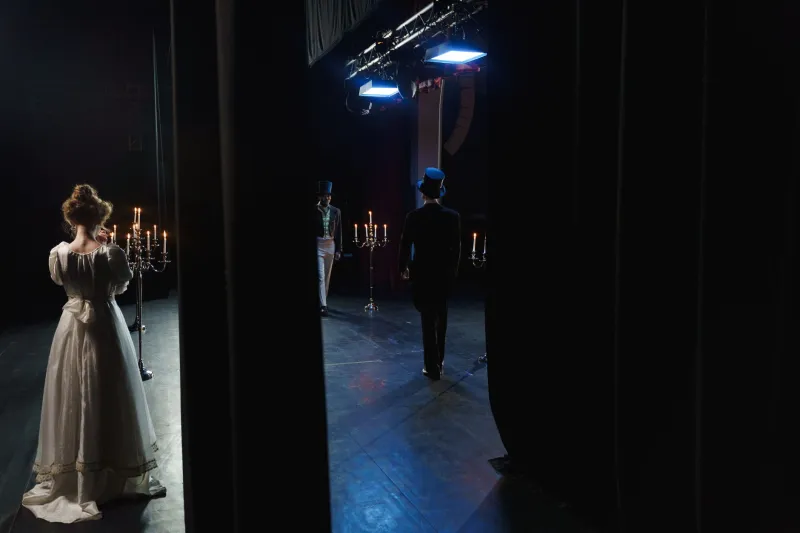
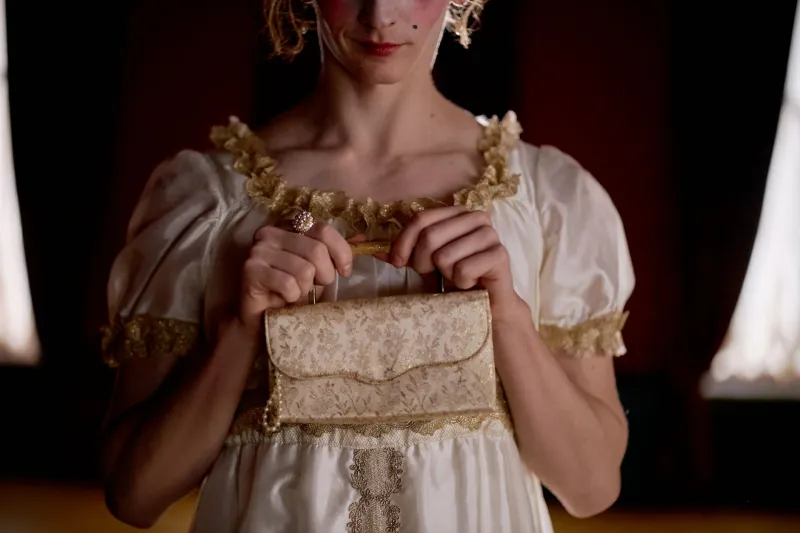
Now let's look at how you appear in a British period drama. Your skin is flawless. Your hair, while technically period-appropriate, has clearly been touched by someone with a very good diffuser. Your dress — despite being the sort of garment a woman of your station would own precisely one of and wear until it disintegrated — appears to have been dry-cleaned this morning. You are, in short, gorgeous. Improbably, anachronistically, magnificently gorgeous.
British costume drama has been doing this for decades, and we've largely let it get away with it. The question is whether we should keep doing so — and what it reveals about our relationship with the past when we don't.
The Corset Conundrum
The costume department of any major British period production occupies a unique position in the industry: it receives enormous budgets, extraordinary craftsmanship, and considerable critical attention, while simultaneously being asked to do something fundamentally contradictory. Create clothing that is historically accurate enough to feel authentic, but aesthetically appealing enough to make viewers want to live inside the story.
These two requirements are not always compatible. Historically accurate 18th-century working-class clothing was rough, patched, frequently malodorous, and worn by people whose bodies showed the physical evidence of hard labour. This is not what gets commissioned. What gets commissioned is a version of the past filtered through the aesthetic sensibilities of contemporary fashion, where historical silhouettes are preserved but rendered in fabrics that catch the light beautifully, and where the heroine's travelling dress somehow manages to look runway-ready after three days on horseback.
Bridgerton is the most gleefully unrepentant example of this tendency, and to its enormous credit, it doesn't pretend otherwise. The Netflix production essentially announced upfront that it was doing historical fantasy — diverse casting, anachronistic musical choices, colour palettes that owe more to a mood board than a museum — and audiences responded by making it one of the most-watched shows on the platform. When a period drama admits the game it's playing, the result can be genuinely liberating.
The problem is the ones that don't.
The Downton Effect and the Manor House Mythology
Downton Abbey deserves its own chapter in any serious examination of British period drama aesthetics, not because it's uniquely dishonest but because its influence has been so vast and so specific. The show essentially established a template for the aspirational country house drama that has been replicated, homaged, and quietly plagiarised ever since: gorgeous architecture, immaculate interiors, class conflict rendered picturesque, and a past that looks so warm and golden you half expect someone to offer you a scone.
The historical reality of Edwardian country house life — the damp, the hierarchy, the physical brutality of below-stairs work, the extraordinary precariousness of existence for servants who could be dismissed without reference on a whim — is present in Downton, technically. But it's present the way a health warning is present on a beautiful wine label: acknowledged, technically legible, and absolutely not the point of the exercise.
This matters because Downton wasn't just a television show — it became a tourism industry, a lifestyle brand, and a cultural argument about a Britain that deserved to be mourned. Highclere Castle, where it was filmed, now charges visitors to tour the rooms. The show's version of the past became, for many people, the definitive version. That's a significant amount of soft power for a costume drama.
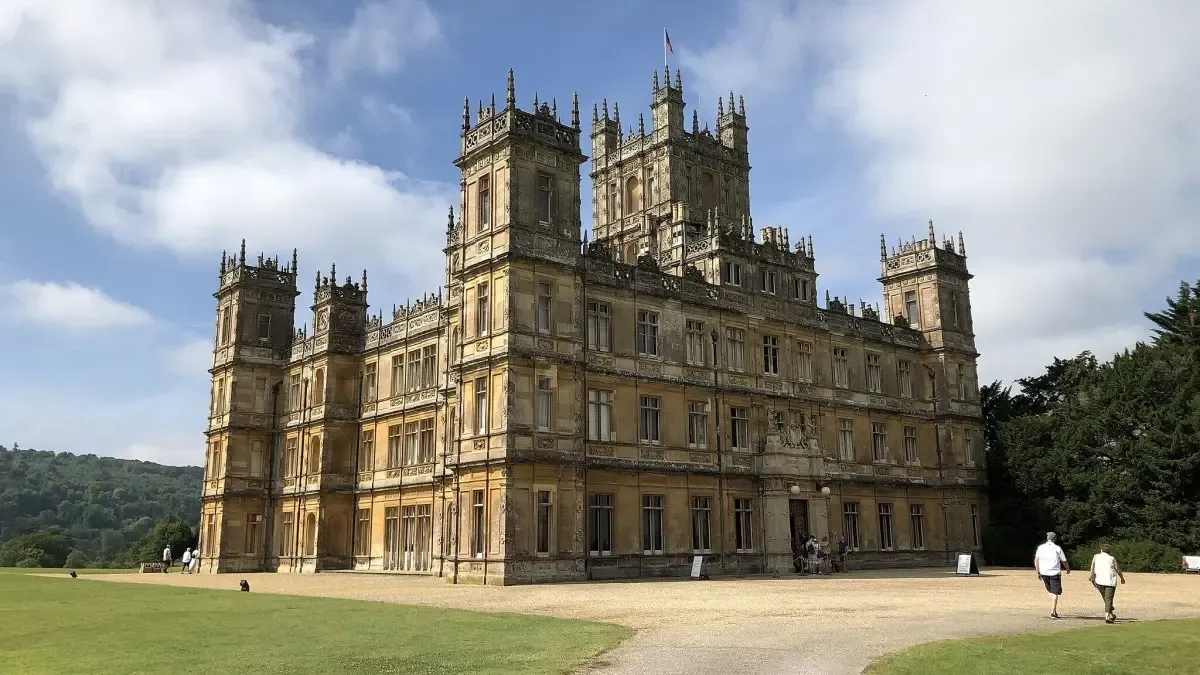 Photo: Highclere Castle, via explorebritain.uk
When the Mud Is Actually the Point
Not everyone is playing this game, and the exceptions are instructive. Wolf Hall — both the original BBC adaptation and its recent continuation — deliberately chose a visual language that prioritised shadow, candlelight, and a general sense of physical reality over conventional period glamour. The Tudor court it depicts feels genuinely dangerous, cold, and morally suffocating in ways that beautiful lighting would have undermined.
Similarly, Poldark's Cornish landscape — whatever you might think of Aidan Turner's inexplicable shirtlessness — grounded its romantic sweep in a physical environment that felt genuinely harsh. The mines were dark. The cliffs were treacherous. The poverty was present rather than decorative.
These choices are not accidental. They represent a deliberate decision to use period authenticity as a narrative tool rather than an obstacle to be overcome by the costume department. And interestingly, they produced some of the most critically admired British drama of recent years. It turns out that a bit of mud can be dramatically useful.
The National Mythology Machine
There's a more pointed critique lurking beneath the aesthetic argument, and it's worth making directly: British period drama is not a neutral art form. It is, whether its creators intend it to be or not, an ongoing negotiation with national identity.
When the past is consistently rendered as beautiful, ordered, and aspirational — when the country houses gleam and the social hierarchies produce charming stories rather than systemic suffering — it creates a visual vocabulary for a particular version of British history. A version in which the Empire is backdrop rather than atrocity, in which class is texture rather than violence, and in which the primary question about the past is not "what did this cost?" but "wasn't it lovely?"
This is not a conspiracy. Nobody is sitting in a commissioning meeting deciding to rehabilitate imperialism through soft-focus cinematography. But the cumulative effect of decades of gorgeous, sanitised period drama is a cultural landscape in which certain kinds of historical nostalgia have been made aesthetically irresistible.
The romanticisation is, in the most literal sense, doing work.
In Defence of the Beautiful Lie
And yet. And yet.
There is something to be said for escapism that knows what it is. The best British period drama — the kind that earns its lavish production values — uses beauty as a vehicle for genuine emotion, complex character, and stories that couldn't be told any other way. The past as a setting offers distance that the present can't provide, and sometimes that distance is precisely what a story needs.
When Pride and Prejudice gives us the Bennet sisters in their impractical muslin dresses, navigating a world of suffocating limitation with wit and desperation, the beauty of the production isn't obscuring the critique — it's making it watchable. The glamour is the trap. The gorgeous clothes are the cage.
The question isn't whether British period drama should be beautiful. It's whether the beauty is doing anything other than making the past look like somewhere you'd want to visit on a long weekend.
Because trust us — you really, really wouldn't.