Mid-Series Madness: When British Telly Had the Audacity to Completely Reinvent Itself

The Art of the Televisual Sucker Punch
There's something uniquely British about lulling viewers into a false sense of security before delivering a creative haymaker that leaves everyone reeling. While American television tends to telegraph its big swings seasons in advance, British shows have mastered the art of the mid-series metamorphosis — the moment when everything you thought you knew about a programme gets tossed out the window with casual, devastating precision.
These aren't gradual evolutions or carefully planned pivots. These are full-scale format explosions that happen without warning, transforming familiar shows into something entirely different while somehow remaining essentially themselves. It's the televisual equivalent of your favourite pub suddenly becoming a Michelin-starred restaurant overnight — shocking, but undeniably brilliant.
The Fleabag Fourth Wall Massacre
Phoebe Waller-Bridge's Fleabag pulled off perhaps the most audacious mid-series reinvention in recent memory. The first series established direct audience address as a quirky character trait — Fleabag's knowing winks and asides felt like shared secrets between friends. Then series two arrived and weaponised that intimacy, turning it into the show's central dramatic engine.
 Photo: Phoebe Waller-Bridge, via www.hollywoodreporter.com
When Andrew Scott's Hot Priest noticed Fleabag's camera glances, everything changed. Suddenly, the fourth wall wasn't just broken — it became a character itself, a barrier between Fleabag and genuine human connection. The show transformed from a comedy about a messy woman into a meditation on performance, authenticity, and the stories we tell ourselves. It was format-breaking disguised as character development, and it was absolutely genius.
 Photo: Andrew Scott, via static1.srcdn.com
Charlie Brooker's Reality Hack
Long before Black Mirror made him the prophet of digital doom, Charlie Brooker was experimenting with format destruction in Dead Set. The show started as a straightforward zombie apocalypse thriller set in the Big Brother house — already a brilliantly twisted premise. But halfway through, Brooker did something extraordinary: he made the reality TV format itself part of the horror.
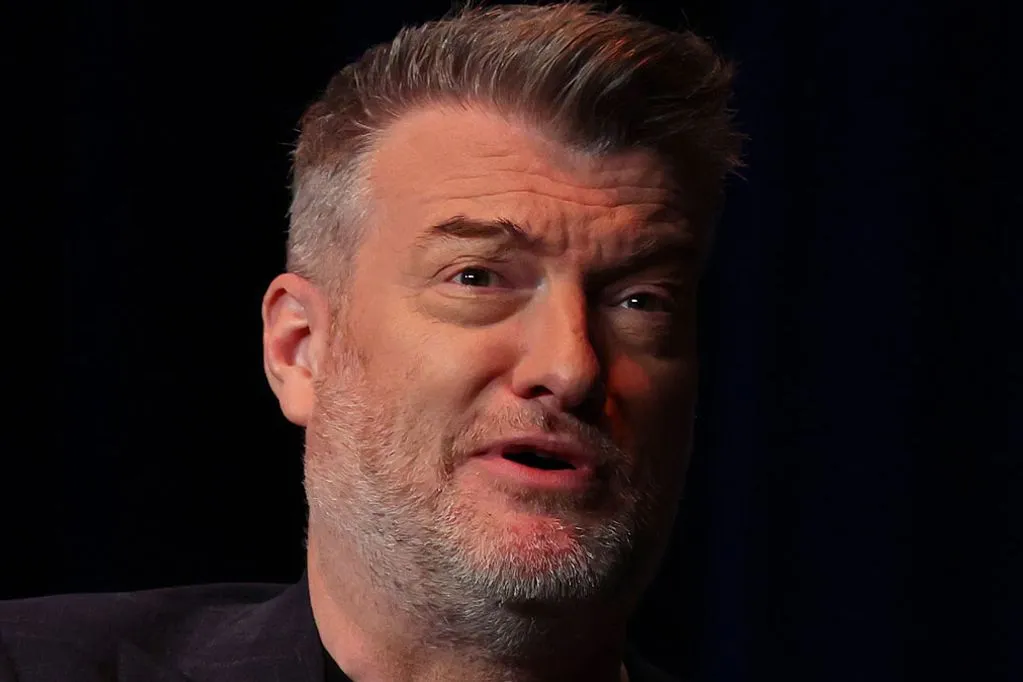 Photo: Charlie Brooker, via i2-prod.mirror.co.uk
The cameras kept rolling even as civilisation collapsed, turning survival into entertainment and entertainment into nightmare fuel. It wasn't just a zombie show that happened to be set on a reality programme — it was a brutal deconstruction of reality TV's voyeuristic nature, using genre conventions to expose the medium's inherent cruelty. The format flip revealed the horror that was already there.
When Cracker Cracked
Jimmy McGovern's Cracker spent two series establishing itself as a brilliant but relatively conventional crime drama. Robbie Coltrane's Fitz was the archetypal troubled genius, solving cases through psychological insight while battling his own demons. Then came 'To Be a Somebody' — an episode that completely abandoned the show's established structure to tell the story of a Hillsborough survivor turned murderer.
Sudenly, the format shifted from 'genius solves crime' to 'society creates monsters.' The episode played more like a piece of investigative journalism than entertainment, using the familiar framework to deliver a devastating critique of media manipulation and institutional failure. It was television masquerading as social commentary, and it left audiences genuinely shaken.
The Sherlock Deception Engine
Steven Moffat and Mark Gatiss built Sherlock on the promise of faithful adaptation — classic stories updated for the modern world. For two series, they delivered exactly that, with Benedict Cumberbatch's Holmes solving familiar cases with contemporary twists. Then they pulled their masterstroke: they made the audience complicit in their own deception.
The show began questioning the nature of heroism, reliability of narration, and the difference between legend and reality. Episodes became exercises in misdirection, with the format itself becoming unreliable. Were we watching objective truth or carefully constructed myth? The show transformed from adaptation to meditation on the nature of storytelling itself, using our familiarity with the source material against us.
The Genius of the Calculated Risk
What makes these format-breaking moments so effective isn't their audacity — it's their precision. Each show waited until it had established complete audience trust before deploying its nuclear option. They understood that format-breaking only works when viewers have something to break against, a set of expectations that can be systematically demolished.
British television's willingness to commit creative suicide for artistic gain reflects something deeper about the medium's relationship with its audience. There's an implicit understanding that viewers are sophisticated enough to handle radical shifts, intelligent enough to appreciate the craft involved in pulling them off.
The Legacy of the Left Turn
These moments of mid-series madness have influenced an entire generation of television creators. Shows like Killing Eve, Normal People, and I May Destroy You all demonstrate the confidence to radically shift tone, style, or perspective without warning. They've learned that audiences don't just tolerate creative risks — they actively crave them.
The success of these format-breaking experiments proves that British television's greatest strength isn't its adherence to established formulas — it's its willingness to blow those formulas to smithereens when the story demands it. In an era of algorithmic content creation and focus-group-tested programming, there's something gloriously anarchic about shows that have the nerve to completely reinvent themselves mid-stream.
The Revolution Will Be Televised
Ultimately, these moments represent television at its most cinematic — not because they look like films, but because they demonstrate the medium's unique capacity for sustained misdirection. Only television can spend hours or even seasons building audience expectations before systematically dismantling them. It's a power that comes with enormous responsibility, and these shows wielded it with surgical precision.
In a media landscape increasingly dominated by safe choices and proven formulas, British television's format-breaking tradition feels more vital than ever. These are the moments that remind us why we fell in love with the medium in the first place — not for its predictability, but for its capacity to surprise, challenge, and occasionally completely blow our minds.