Beyond the M25: How British TV Finally Discovered There's Life Outside London
Beyond the M25: How British TV Finally Discovered There's Life Outside London
For the better part of British television's existence, the industry operated under a simple geographical principle: London existed in glorious technicolour detail, while everywhere else was painted in broad, often patronising strokes. If you lived north of the Watford Gap, your chances of seeing authentic representation of your community on screen were roughly equivalent to spotting a unicorn in your local Asda car park.
But something extraordinary has been happening over the past few years. British television has finally woken up to the radical notion that interesting stories might actually exist outside the M25. And the results have been nothing short of transformational.
The London-Centric Legacy
To understand how revolutionary this shift is, we need to acknowledge just how London-obsessed British television used to be. For decades, the industry's creative decision-makers lived, worked, and socialised within a handful of postcodes, creating content that reflected their own experiences and assumptions.
When regional stories did make it to screen, they often felt like anthropological expeditions. Northern characters were either gritty working-class stereotypes or comic relief. Scottish stories defaulted to Highland romance or urban decay. Wales might get a mention if someone needed to hide a body in a remote location.
The result was a television landscape that consistently failed to reflect the diversity and complexity of modern Britain. Entire communities remained invisible, their stories untold, their voices unheard. It was cultural imperialism disguised as entertainment.
The Authenticity Awakening
The turning point came when broadcasters finally started paying attention to their own viewing figures. Shows with authentic regional settings weren't just performing well — they were consistently outperforming their metropolitan equivalents. Audiences, it turned out, were hungry for stories that felt real, specific, and rooted in genuine places.
Happy Valley proved that a story set in the Calder Valley could captivate the entire nation. Sarah Lancashire's Catherine Cawood wasn't just a great character — she was a specifically Yorkshire character, shaped by her environment in ways that felt authentic rather than stereotypical.
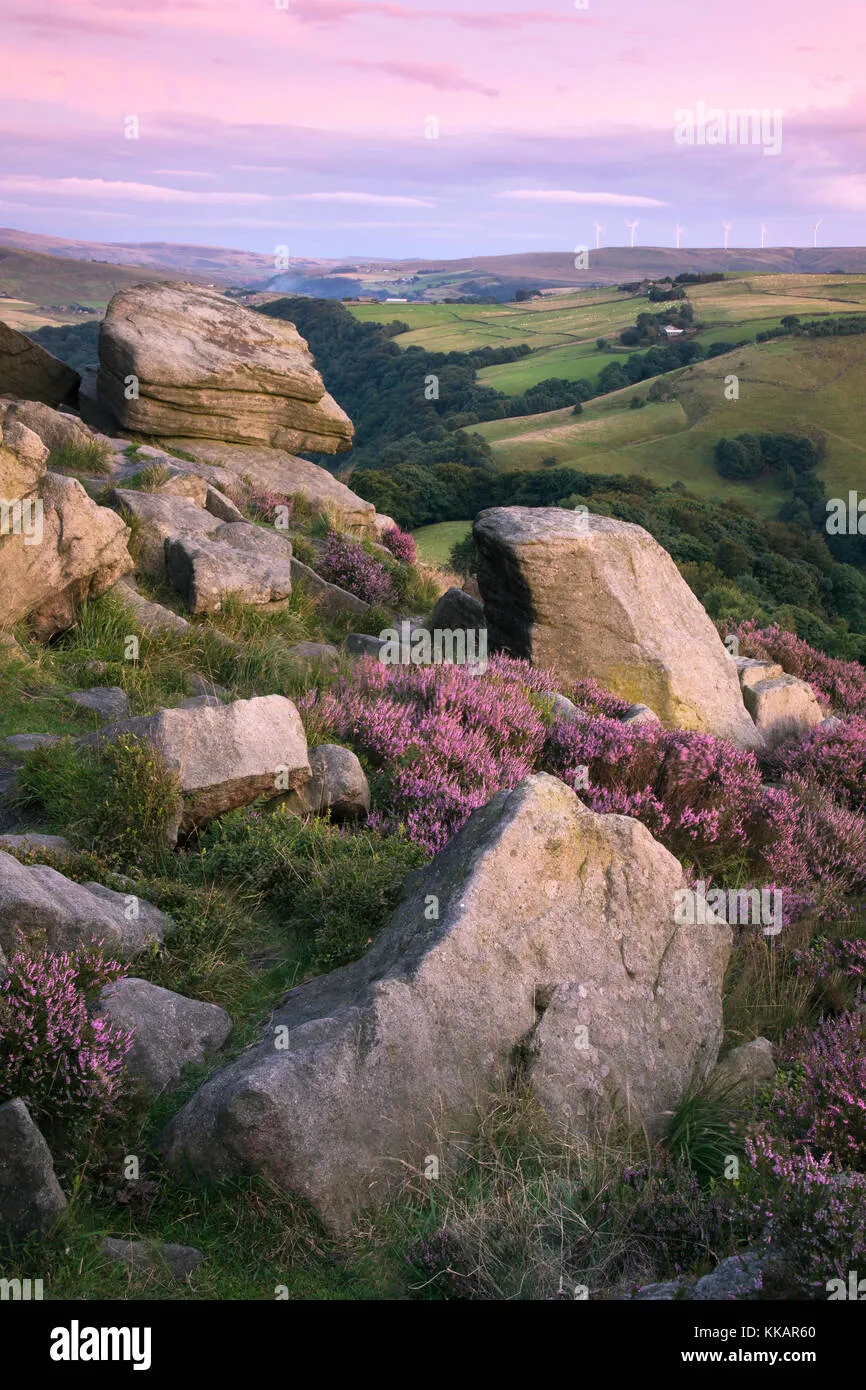 Photo: Calder Valley, via c8.alamy.com
Similarly, This Is England demonstrated that stories about working-class communities could be both critically acclaimed and commercially successful when they were told with honesty and respect rather than condescension or sentimentality.
The Scottish Renaissance
Scotland has been at the forefront of this regional revolution, producing a string of shows that have redefined what Scottish television can be. Outlander may have the international profile, but it's shows like Shetland, Taggart, and Still Game that have shown the depth and variety of Scottish storytelling.
Shetland deserves particular credit for treating its remote island setting as a character in its own right rather than just an exotic backdrop. The show's success proved that audiences were willing to invest in stories from the furthest corners of the British Isles when they were told with authenticity and respect.
More recently, Limmy's Show and Burnistoun have shown that Scottish comedy doesn't need to rely on tired stereotypes about kilts and haggis. These shows are confidently Scottish without feeling the need to explain themselves to a London audience.
The Northern Powerhouse of Storytelling
The North of England has perhaps benefited most from this shift towards regional authenticity. Shows like Shameless, Phoenix Nights, and The Royle Family paved the way, but recent productions have taken this foundation and built something genuinely impressive.
Line of Duty may be set in an unnamed city, but its Midlands locations and authentic police procedural elements feel worlds away from the glamorous London crime dramas that dominated screens for so long. The show's success proved that audiences were ready for police work that felt real rather than aspirational.
Peaky Blinders, meanwhile, put Birmingham on the map as a serious television location. The show's success has led to increased investment in Midlands-based productions and proved that regional settings can have international appeal.
The Welsh Renaissance
Wales has been quietly building its own television renaissance, with shows like Hinterland and Keeping Faith proving that Welsh stories can captivate audiences across the UK and beyond. Hinterland's bilingual approach was particularly innovative, reflecting the linguistic reality of modern Wales in a way that felt natural rather than forced.
The success of these productions has led to increased investment in Welsh television, with S4C and BBC Wales developing more ambitious projects that showcase the country's dramatic landscapes and rich storytelling traditions.
The Data Doesn't Lie
The numbers tell a compelling story about the power of authentic regional programming. Shows with genuine regional settings consistently outperform generic metropolitan dramas in both audience figures and critical reception. Happy Valley regularly attracts audiences of over 9 million, while Shetland has become one of BBC's most reliable performers.
More importantly, these shows tend to have longer lifespans and stronger international sales. Authentic regional content travels well because it offers something distinctive rather than generic. International audiences aren't looking for British shows that could be made anywhere — they want stories that could only come from Britain.
The Infrastructure Revolution
This creative shift has been supported by significant changes in television infrastructure. The establishment of production hubs in Manchester, Glasgow, Cardiff, and Belfast has made it easier for regional stories to get made by regional talent.
BBC Three's move to Salford was initially controversial, but it's led to a generation of programmes that might never have been commissioned from London. Shows like People Just Do Nothing and Some Girls emerged from this more geographically diverse commissioning process.
Similarly, Channel 4's move to Leeds has already started to influence the types of stories being told and the voices being heard. When commissioners live and work in different parts of the country, they're naturally more attuned to regional stories and perspectives.
The Streaming Effect
Streaming platforms have accelerated this trend by providing new outlets for regional content. Netflix's investment in British productions has often focused on distinctive regional stories rather than generic London-based content.
The Crown may be set in London, but its success has encouraged streamers to look for other uniquely British stories. This has created opportunities for regional productions that might have struggled to find traditional broadcast slots.
The Talent Pipeline
Perhaps the most significant long-term change has been the development of regional talent pipelines. Drama schools, film schools, and production companies outside London are finally getting the investment and recognition they deserve.
This means that regional stories are increasingly being told by regional voices, rather than London-based writers and directors attempting to capture authentic regional experiences. The difference in authenticity is immediately apparent on screen.
The Economic Impact
The economic benefits of this shift extend far beyond television production. Successful regional shows drive tourism, attract investment, and create employment opportunities in areas that have often been overlooked by the creative industries.
Outlander has been worth millions to the Scottish tourism industry, while Poldark has had a similar impact on Cornwall. These shows create a virtuous circle where regional investment leads to authentic storytelling, which drives audience interest and economic benefits.
The Challenges Ahead
Despite this progress, significant challenges remain. London still dominates television commissioning, and regional voices often struggle to get their stories heard. The cost of production outside established hubs can still be prohibitive, and there's always the temptation to fall back on familiar stereotypes.
Moreover, authentic regional programming requires long-term commitment and investment. It's not enough to commission the occasional regional drama — broadcasters need to build sustainable production ecosystems that can support ongoing regional storytelling.
The Future of Regional Television
The trend towards authentic regional programming shows no signs of slowing. Audiences have developed a taste for stories that feel specific and rooted in real places, and broadcasters are finally responding to this demand.
The next phase will likely involve even more diverse regional voices, including stories from Britain's immigrant communities and smaller towns that have been overlooked even by the regional revolution.
Ultimately, the discovery that there's life beyond the M25 has been one of the best things to happen to British television in decades. It's created more diverse, authentic, and compelling content while providing opportunities for talent that might otherwise have been overlooked.
The revolution is far from complete, but the direction of travel is clear: British television is finally becoming as diverse and interesting as Britain itself. And about bloody time too.