Cobbles, Cues, and Craft: Why Britain's Soaps Are Actually the World's Toughest Drama School

Cobbles, Cues, and Craft: Why Britain's Soaps Are Actually the World's Toughest Drama School
Imagine turning up to work every single day and being handed pages of emotionally charged dialogue you've never seen before, expected to deliver them convincingly, hit every technical mark, and do the whole thing again tomorrow. Now imagine doing that for five years straight, in front of millions of viewers, with absolutely no room for an off day.
That's not a drama school exercise. That's a Tuesday on Coronation Street.
 Photo: Coronation Street, via www.backtothebay.net
Britain's soaps have spent decades being sniggered at by the same industry that quietly, consistently, and somewhat shamefacedly keeps raiding them for its best talent. And it's about time someone said what the BAFTA room has been too polite to acknowledge: the cobbles, the Square, and the Dales are producing some of the finest actors working in British television today.
Volume, Velocity, and the Crucible of Continuous Drama
To understand why soaps work as training grounds, you have to understand the sheer industrial scale of what they demand. EastEnders airs four times a week. Emmerdale manages six episodes. Coronation Street regularly hits that same number. These are not productions with the luxury of second takes, extended rehearsal periods, or the contemplative pace of a prestige six-parter.
Actors on these shows learn to be present, technically precise, and emotionally available at a pace that would break most theatre-trained performers. They develop instincts — for the camera, for scene partners, for the exact moment a scene needs to shift gear — that can only come from repetition on an almost athletic scale. By the time a soap actor has clocked five years on a long-running serial, they've accumulated more screen hours than many film actors accumulate across an entire career.
That's not a coincidence. It's the point.
The Alumni Club Nobody Wants to Admit They're In
Run your eye down the cast list of any critically acclaimed British drama from the past two decades and you'll find them: the soap graduates. Quietly excellent, often in roles that demand the kind of emotional range that takes most people years to develop.
Suranne Jones spent years as Karen McDonald in Coronation Street before becoming one of British television's most compelling leads in Scott & Bailey and Gentleman Jack. Sean Bean did his early television time in Emmerdale before becoming, well, Sean Bean. Amanda Holden, Martine McCutcheon, Anna Friel — the list of actors who sharpened their skills on continuous drama before crossing over into mainstream prestige work is genuinely staggering once you start looking.
 Photo: Sean Bean, via 58v76y8z87lo.hellomagazine.com
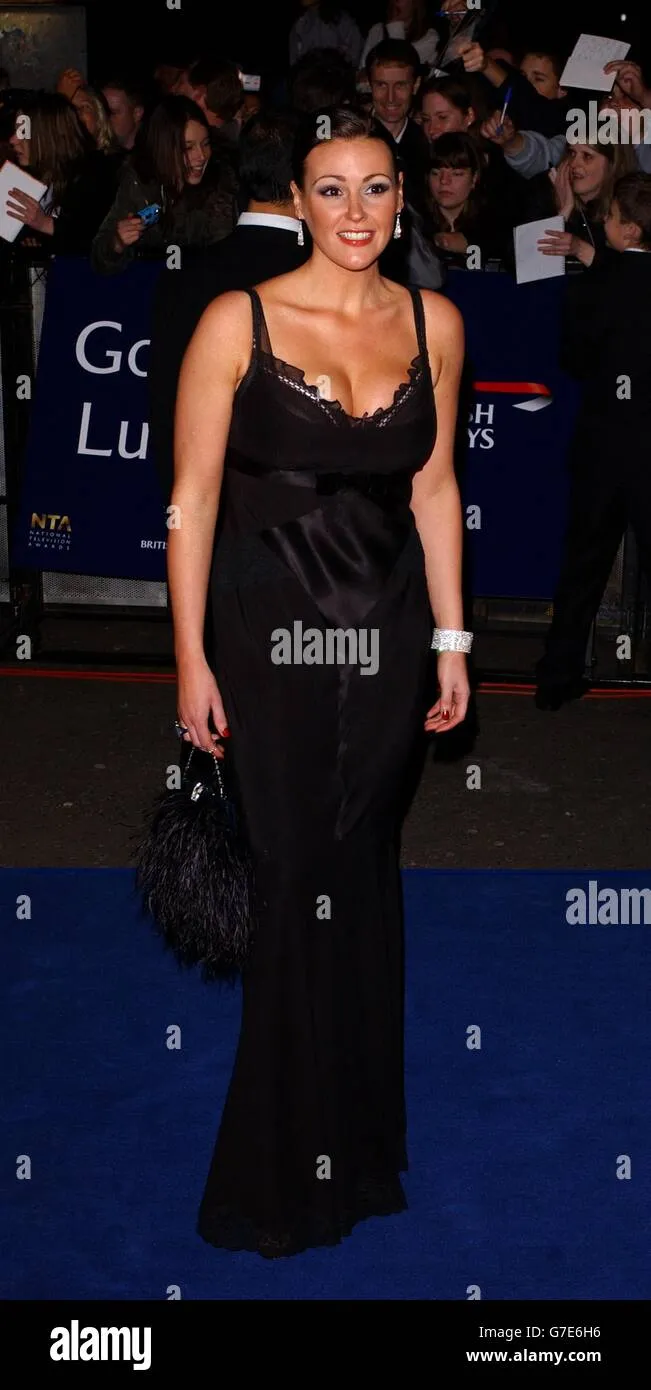 Photo: Suranne Jones, via c8.alamy.com
More recently, the pipeline has only accelerated. Casting directors for high-end drama increasingly know exactly where to look when they need someone who can carry a scene without scaffolding — someone who's been doing precisely that, five days a week, for years.
The Crying Game (And All the Other Games)
There's a specific skill that soap actors develop that rarely gets the credit it deserves: the ability to manufacture genuine emotional responses on demand, in close-up, often with a camera operator approximately four inches from their face.
This is harder than it sounds. Much harder. Actors in film and prestige television often have the luxury of time — time to prepare, time to find the moment, time to do it again if it doesn't land. In soap, the schedule simply doesn't permit that indulgence. You find the emotion or you don't, and the camera records whichever one happens. Over years of this, the successful soap actors develop an emotional musculature that is, frankly, extraordinary.
Watch a long-running Coronation Street performer in a climactic scene and pay attention to what they're actually doing technically — the breath control, the micro-expressions, the way they listen rather than just wait to speak. It's masterclass material. It just happens to be set in a terraced house in a fictional Salford.
The Respect Deficit
Here's where it gets a bit uncomfortable. Despite all of the above — despite the talent, the volume, the technical demands, the cultural reach — soap opera remains oddly marginalised at the industry's top table. BAFTA has historically been stingy with its recognition of continuous drama. Critics who cover prestige television often treat soap as a separate, lesser category. And actors who've made the jump from serial drama to critical darling status occasionally seem quietly reluctant to dwell too long on where they came from.
This is, to put it plainly, daft. The skills that make someone exceptional in a six-episode psychological thriller are largely the same skills that soap opera demands at volume, daily, without the benefit of a generous post-production window. The training ground is the training ground, whatever the postcode.
There's also a class dimension worth acknowledging. Soap opera has always been television for people — popular, accessible, embedded in communities that prestige drama often ignores. The dismissiveness around it isn't purely aesthetic. It's also, at some level, a snobbery about audience.
What the Cobbles Know That Drama School Doesn't
There are things you cannot learn in a rehearsal room that soap opera teaches you by necessity. How to work with a scene partner you didn't choose. How to stay focused when the schedule slips and everything's running late and you've still got three scenes to shoot before wrap. How to find something true in a line of dialogue that, on paper, looks like it was written in fifteen minutes (because, occasionally, it was).
These are professional survival skills. And the actors who emerge from long stints in continuous drama carrying them are, in many ways, the most battle-tested performers in the industry.
The next time a Coronation Street veteran turns up in a Sunday night thriller and absolutely steals the show, resist the urge to be surprised. They've been doing this for years. The rest of television is only just catching up.