The Name You Never Know: How British TV's Directors Became the Industry's Best-Kept Secret
Picture the scene. A devastatingly well-composed shot holds on an actor's face for just a beat too long — long enough for something unspoken to become unbearable. The lighting is doing something extraordinary. The silence is louder than any dialogue could be. You feel it in your chest. You tell everyone the show is a masterpiece.
Whose masterpiece, though? You'd say the writer's name. Maybe the lead actor's. Possibly the showrunner, if you're the sort of person who reads production credits and has strong opinions about them. But the person who made that specific choice — who said hold it there, who positioned the camera three inches to the left, who understood that the scene only works if we never cut away — that person is, to all intents and purposes, invisible.
British television has a directing problem. Not with the quality of its directors, who are, across the board, quietly extraordinary. The problem is that nobody knows who they are.
The Showrunner Takeover
Somewhere in the mid-2000s, British television absorbed the American concept of the showrunner and ran with it at full sprint. The showrunner model — in which a writer-producer holds creative authority over an entire series — has produced some of British telly's finest hours. Doctor Who under Russell T Davies. Fleabag under Phoebe Waller-Bridge. Succession, technically American but staffed largely by British talent, under Jesse Armstrong.
The showrunner became the auteur. The face. The person interviewed in every magazine, the name in every headline, the creative vision the marketing department could point at and say: this person made this thing, and this person is brilliant.
None of that is wrong, exactly. Showrunners do extraordinary work. But the elevation of the writer-producer to celebrity status has had an unintended consequence: it has made everyone else in the creative chain — and particularly directors — functionally anonymous by comparison.
What Directors Actually Do (And Why It's Mental That We Don't Know Their Names)
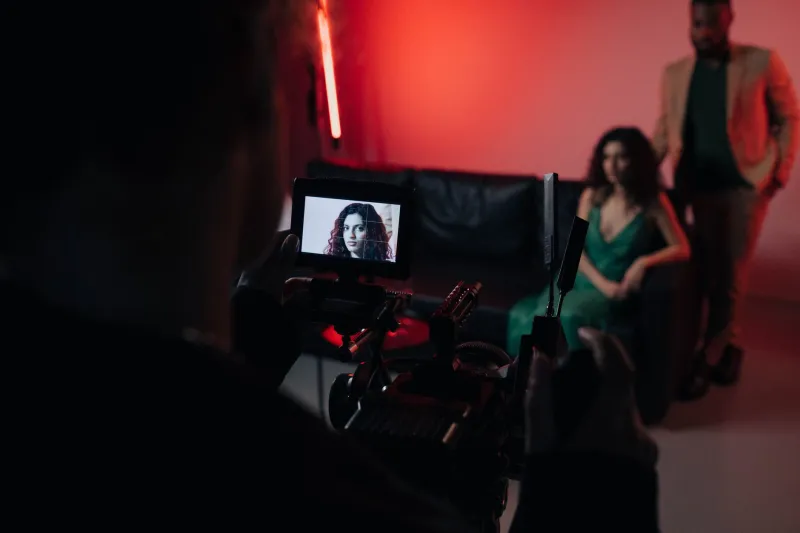
Let's be specific about this, because vagueness is part of the problem. A TV director isn't someone who turns up, shouts action, and goes home. They are, in practice, the person who translates the written word into a visual and emotional experience.
They decide where the camera goes and why. They work with the actors to find performances that the script can only gesture towards. They collaborate with the cinematographer, the production designer, the composer — the entire visual and sonic apparatus of a show — to create something that is, in a very real sense, what you actually watch. The script is the blueprint. The director builds the house.
On a drama like Happy Valley or Shetland or The Responder, the director's choices about landscape, pacing, and visual tone are doing as much narrative work as the dialogue. You feel the Yorkshire moors as menace or as freedom depending on how they're shot. That's not the writer's decision. That's the director's.
So why, when Happy Valley was rightly celebrated as a landmark of British television, did most viewers come away knowing Sally Wainwright's name but not those of the directors who made it look the way it looked?
The Multiple Director Problem
Part of the answer lies in how British drama is structured. Unlike film, where a single director shepherds a project from beginning to end, most British TV series employ multiple directors — often two or three across a six or eight episode run. This creates a practical anonymity problem: if three directors worked on a series, which one gets the credit? Who is the auteur?
The answer, under the current system, is nobody. Or rather, the showrunner absorbs the authorship by default, because they're the consistent creative presence across all episodes. The directors rotate in, do their episodes, and rotate out. They're skilled contributors to someone else's vision rather than the primary author of it.
This isn't entirely unfair — television genuinely is a more collaborative medium than film, and the showrunner model does reflect a real creative truth. But it creates a hierarchy in which directors are treated, in terms of public recognition, as highly skilled technicians rather than creative artists. Which is, to put it politely, not quite right.
The Ones Who Should Be Famous
Consider a few names that should, by any reasonable measure, be significantly more famous than they are.
Eureka Tsitsi Mazunga directed episodes of I May Destroy You, one of the most formally inventive pieces of British television in recent memory. Euros Lyn directed the defining episodes of the Doctor Who revival — the ones that made the nation cry — and has since helmed Daredevil for Marvel. Jamie Donoughue directed the Bodyguard finale that had the entire country holding its breath. These are not minor contributions. These are career-defining achievements in popular culture.
Ask a casual viewer to name any of them, though, and you'll get a polite blank stare.
Compare this to film, where directors are — however irrationally — the primary celebrity. Nobody watches a Christopher Nolan film and forgets who made it. The auteur theory has its critics, but it has at least given film directors a cultural visibility that their television counterparts simply don't enjoy.
Does It Actually Matter?
Yes, and not just for the directors' egos. The invisibility of TV directors has real creative consequences.
When directors are anonymous contributors rather than recognised creative voices, they have less leverage to fight for their vision. They're less able to develop a distinct style across projects, because audiences aren't following them from show to show. They're less likely to attract the kind of passionate creative collaboration that happens when talented people want to work with a specific person rather than simply on a specific project.
More broadly, the anonymity of directors shapes how the industry talks about itself and, consequently, how it develops. If the dominant narrative is that television is a writer's medium, full stop, then resources — creative, financial, and reputational — flow accordingly. Directors become a line item rather than a draw.
There are signs of change. Streaming platforms, particularly those with cinematic ambitions, have begun to foreground directors more explicitly. Apple TV+ in particular has leaned into the director-as-brand model, and it's attracted some extraordinary talent as a result. The BBC has occasionally made noise about elevating directorial voices. But progress is slow, and the cultural default remains firmly in the showrunner's corner.
Flipping the Credit
The simplest fix isn't really about money or contracts — it's about language and habit. Critics, journalists, and yes, entertainment websites (hello) could simply name the directors when discussing episodes. Not just the showrunner. Not just the lead writer. The person who made the thing look the way it looked.
It costs nothing. It takes two seconds. And it might, over time, shift the cultural understanding of what television directing actually is: not a support function for someone else's vision, but a creative act in its own right — one that deserves a name attached to it.
Because the next time a shot holds for a beat too long and you feel it somewhere unspecific and real, you deserve to know whose choice that was. And they deserve you knowing.