Cut, Paste, Deceive: The Edit Suite Tricks British TV Is Hoping You're Too Distracted to Notice
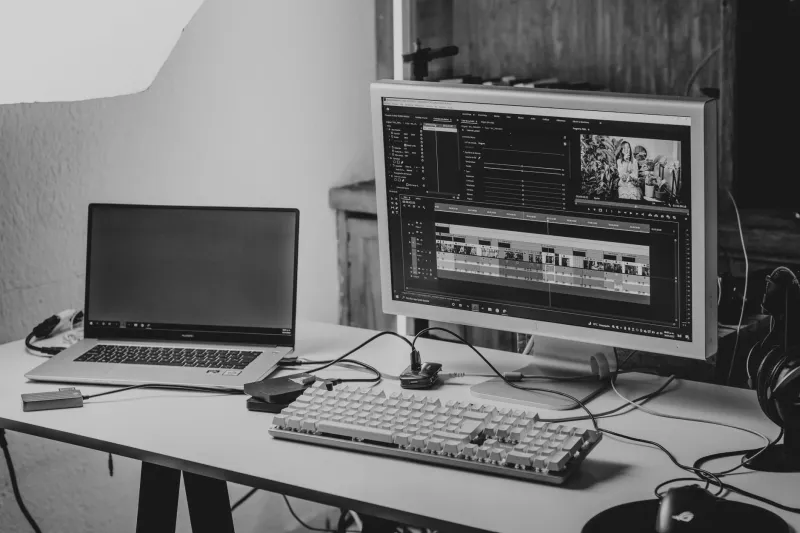
Somewhere in a post-production suite, right now, an editor is doing something extraordinary that you will never be given credit for noticing. They are rearranging reality. They are making two conversations that happened three weeks apart look like a single tense exchange. They are choosing which two seconds of a person's face will define how an entire nation feels about them. They are, in the most literal sense, constructing the version of events you're about to receive as truth.
Welcome to the most powerful job in British television that nobody talks about at parties.
The Reality Show Time Machine
Let's start with the genre that has made an art form of chronological chaos: the British reality show. Love Island, The Great British Bake Off, I'm a Celebrity — these programmes are not documents. They are constructions. And the editing tricks employed to build them have become so sophisticated that even media-literate viewers are regularly fooled.
The classic move is the false reaction cut. Contestant says something. Cut to another contestant pulling a horrified face. Implication: they heard it and are appalled. Reality: that horrified face was filmed at a completely different moment, possibly in response to a spider. You've been had, and you felt the emotional impact anyway, because the edit knew exactly what it was doing.
Timeline compression is equally prevalent. On any given episode of a reality competition, events that unfolded across twelve hours are stitched into forty-five minutes. Arguments that began at breakfast appear to conclude at dinner when they actually petered out somewhere around lunch. The drama is real. The sequence is fiction.
British reality television producers will tell you this is simply the craft of storytelling — taking raw material and shaping it into something watchable. They're not entirely wrong. But the gap between "shaping" and "manipulating" has been quietly narrowing for years, and the edit suite is where that happens.
Drama's New Visual Language
Shift across to scripted drama, and the editing conversation becomes more interesting and considerably less ethically murky. British television has always had a strong tradition of formally inventive drama, and recent years have seen editors and directors push the cut into genuinely new territory.
The BBC's output in particular has featured drama that uses editing not to clarify narrative but to create ambiguity. Jump cuts that leave you uncertain about time. Parallel sequences that draw uncomfortable comparisons. Smash cuts that use contrast as punctuation — the sudden silence after a burst of noise, the mundane image that follows the catastrophic one. These aren't accidents. They're arguments.
Channel 4's more experimental drama strand has long embraced editing as a kind of authorial voice. When a cut feels wrong — when it jars, when it withholds information you expected — that wrongness is frequently the point. The discomfort is data. The editor is telling you something the dialogue isn't.
This represents a genuine evolution in how British telly communicates. For decades, the dominant philosophy of editing was invisibility: the best cut is the one you don't notice. That orthodoxy is crumbling, and the results are sometimes extraordinary.
The Audience Catches Up
Here's where it gets really interesting. British viewers, raised on a diet of behind-the-scenes documentaries, YouTube video essays, and the kind of forensic social media analysis that would make a detective blush, are increasingly edit-literate.
TikTok and Twitter are full of people catching reality shows in the act — screenshotting continuity errors that reveal a scene was filmed out of sequence, noticing that a participant's outfit changes mid-conversation, spotting the audio splice that stitches two different sentences into one damning quote. The edit, once invisible, is now regularly under public examination.
This has created a fascinating arms race. Producers, aware that their audience is watching with a more analytical eye, have had to become either more careful or more brazen. Some shows have responded by leaning into transparency — Bake Off's gentle, good-natured editing has become part of its charm precisely because it feels trustworthy. Others have doubled down on complexity, making the manipulation so intricate that catching it becomes almost impossible without access to the raw footage.
When the Edit Becomes the Story
Occasionally, the editing of a programme stops being a behind-the-scenes curiosity and becomes the actual news. The row over how a particular contestant was portrayed in a reality show. The documentary accused of cherry-picking footage to support a predetermined conclusion. The drama that was recut between broadcast and streaming release, leaving viewers who watched both versions with subtly different emotional responses to the same events.
These moments reveal just how much power sits in the edit suite. The editor doesn't just shape the story — they shape the audience's moral response to it. Who is the villain? Who deserves sympathy? Which moment lands as a joke and which as a revelation? These aren't questions answered by the camera. They're answered in post-production, often weeks after filming has wrapped.
British television has produced some genuinely landmark editing — think of the propulsive, disorienting cuts in early Skins, or the almost meditative rhythm of Broadchurch, where the pacing itself communicated grief. These aren't decorative choices. They're the show.
The Invisible Collaborator
For all the increased awareness, editing remains the least glamorous of television's major crafts. Directors get profiles. Writers get interviews. Editors get a credit that flashes past while you're reaching for your phone.
This seems increasingly wrong. As the edit becomes more visible, more deliberate, and more willing to announce itself, the people doing it deserve to be part of the conversation. They are not neutral technicians tidying up someone else's vision. They are co-authors, making thousands of decisions that determine what a show means.
Next time a reality show makes you furious at someone you've never met, or a drama leaves you emotionally winded by a transition you can't quite explain, take a moment to consider the room where it was decided. The edit suite isn't backstage. It's centre stage. It always was. We just weren't looking.