Priced Out of the Picture: The British Locations That TV Can No Longer Afford to Love
There's a moment in almost every British drama where a location does something a set simply can't. A particular quality of northern light on wet stone. The specific chaos of a London market at seven in the morning. The eerie stillness of a Scottish loch with nobody else for miles. These aren't decorative choices — they're emotional ones. Place, in British television, has always been a character.
Which makes it all the more awkward that Britain's most cinematically beloved places are quietly, methodically becoming unavailable to the productions that made them famous.
Rising property costs, saturated filming schedules, council bureaucracy, and the genuinely maddening side effects of location tourism have created a perfect storm. The Britain you see on screen is, increasingly, not quite the Britain that exists — and the gap between the two is widening every year.
The Price of Being Picturesque
Start with the obvious culprit: money. Filming on location in Britain has always been expensive, but the last decade has made certain settings economically prohibitive for all but the most lavishly budgeted productions.
Central London is the most extreme example. A single day's filming on a recognisable London street — factoring in council permits, traffic management, security, crowd control, and the increasingly assertive fees charged by property owners who've clocked exactly how much productions are willing to pay — can run to tens of thousands of pounds. For a single day. On a street that appears for forty seconds of screen time.
The result is that London, one of the most filmed cities in the world, is becoming a place that only American co-productions with Hollywood budgets can actually afford to use properly. British productions with more modest resources are increasingly faking it — shooting in Liverpool, Manchester, or Bristol and hoping that a red telephone box and a few establishing shots of actual London will carry the illusion.
This isn't new. What's new is the scale. Productions that would once have shot entirely on location are now doing it for a handful of key sequences and building everything else on stage.
The Tourism Trap
There's a particular cruelty to what's happened to some of Britain's most visually distinctive locations. The very quality that made them irresistible to cameras has made them irresistible to tourists — and the resulting footfall has made them, in many cases, impossible to film in.
The Shambles in York is a reasonable case study. One of the most photographed streets in Britain, it's been used as a filming location repeatedly over the decades. Now, on a summer weekend, it's so densely packed with visitors that clearing it for a production — even briefly — requires logistics and costs that most budgets simply won't stretch to. The location is simultaneously more famous and less usable than it's ever been.
Similar stories play out in the Cotswolds, where certain villages have become so thoroughly associated with a particular aesthetic of cosy English charm that every production wants to film there, the residents are exhausted by productions, and the councils have responded with restrictions that range from sensible to frankly punitive.
Bibury in Gloucestershire — the village William Morris once called the most beautiful in England, and which has featured in enough period dramas to fund its own heritage trust — now attracts such overwhelming tourist numbers that local residents have reportedly put up signs asking visitors to go away. Filming there, once a relatively straightforward proposition, now requires negotiation worthy of a small diplomatic incident.
The Council Problem
Local councils occupy a curious position in this story. On one hand, they want the economic benefits of filming — the crew spending money in local businesses, the profile boost, the tourism uplift that follows a successful show. On the other hand, they are — understandably — responsible for the residents who actually live in these places and who find a film crew outside their house at six in the morning rather less romantic than the finished product suggests.
The result is a permitting environment that varies wildly from borough to borough and council to council, and which has become, in the experience of many location managers, increasingly difficult to navigate. Some councils have become sophisticated, film-friendly partners with dedicated liaison officers and streamlined processes. Others operate on a system that appears to have been designed by someone who has never met a film crew and doesn't particularly want to.
The unpredictability is itself a problem. When a production can't rely on getting permission to film in a particular location until weeks before the shoot, planning becomes a nightmare. The safer choice — financially and logistically — is increasingly to build it on a soundstage and be done with it.
What's Being Faked, and How
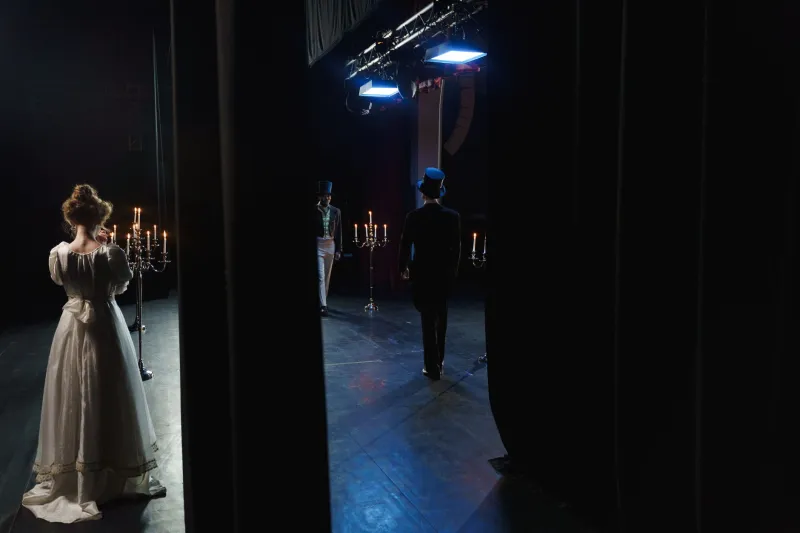
The production design community in Britain is, it must be said, extraordinarily good at this. The skills involved in recreating a specific location on a stage — or in finding an affordable stand-in that reads convincingly as somewhere else — are genuinely impressive and deeply underappreciated.
Glasgow has been doubling for London for decades, its Victorian architecture lending itself to period productions that would cost three times as much to shoot in the actual capital. Belfast, partly thanks to the infrastructure built around Game of Thrones and partly thanks to aggressive filming incentives from the Northern Ireland Screen Commission, has become a production hub capable of doubling for almost anywhere in Britain or beyond.
More recently, the growth of LED volume technology — the giant screens used to create photorealistic background environments without leaving the studio — has opened up new possibilities. A production can now shoot its actors against a convincing digital recreation of the Northumberland coast without anyone leaving London. The results, when done well, are startlingly good. When done badly, they look exactly like what they are.
The concern isn't that production designers aren't up to the task. It's that the increasing reliance on faked locations removes something intangible from the finished product — a groundedness, a specificity, a sense that this story is happening in a real place with real weather and real imperfections that no production designer could have planned.
The Accidental Honesty of Cheaper Locations
There is, buried in all of this, a slightly counterintuitive argument. Some of British television's most visually distinctive recent work has come from productions that couldn't afford the obvious locations and were forced to find somewhere unexpected instead.
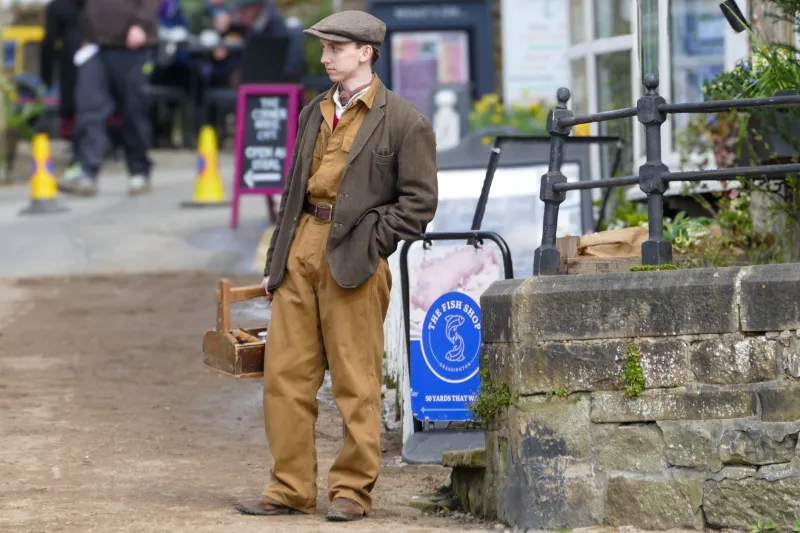
Happy Valley found its identity in the West Yorkshire landscape precisely because it wasn't trying to be anywhere else. The Responder drew much of its power from a Liverpool that felt unglamorous and specific in a way that a generic urban backdrop never could. Shetland made the islands themselves a draw — not because Shetland was the cheapest option, but because the production committed fully to a place that most viewers had never seen on screen before.
Forced creativity, it turns out, can produce more interesting geography than comfortable habit. The Britain that can't afford to film in its own postcard images might, accidentally, end up showing us parts of itself that are more honest, more surprising, and more worth watching.
The cobbled alleyway might be in Slough. But sometimes Slough, shot right, is more interesting than the obvious alternative.